
Private protection-dog coaching • Washington
Protection Dog Training
Carefully planned private training focused on stable behavior, dependable obedience, controlled drive work, reliable disengagement, and responsible handling.
Protection work is not appropriate for every dog or handler. Insight K9 begins with suitability, goals, current control, and safety before recommending any progression.
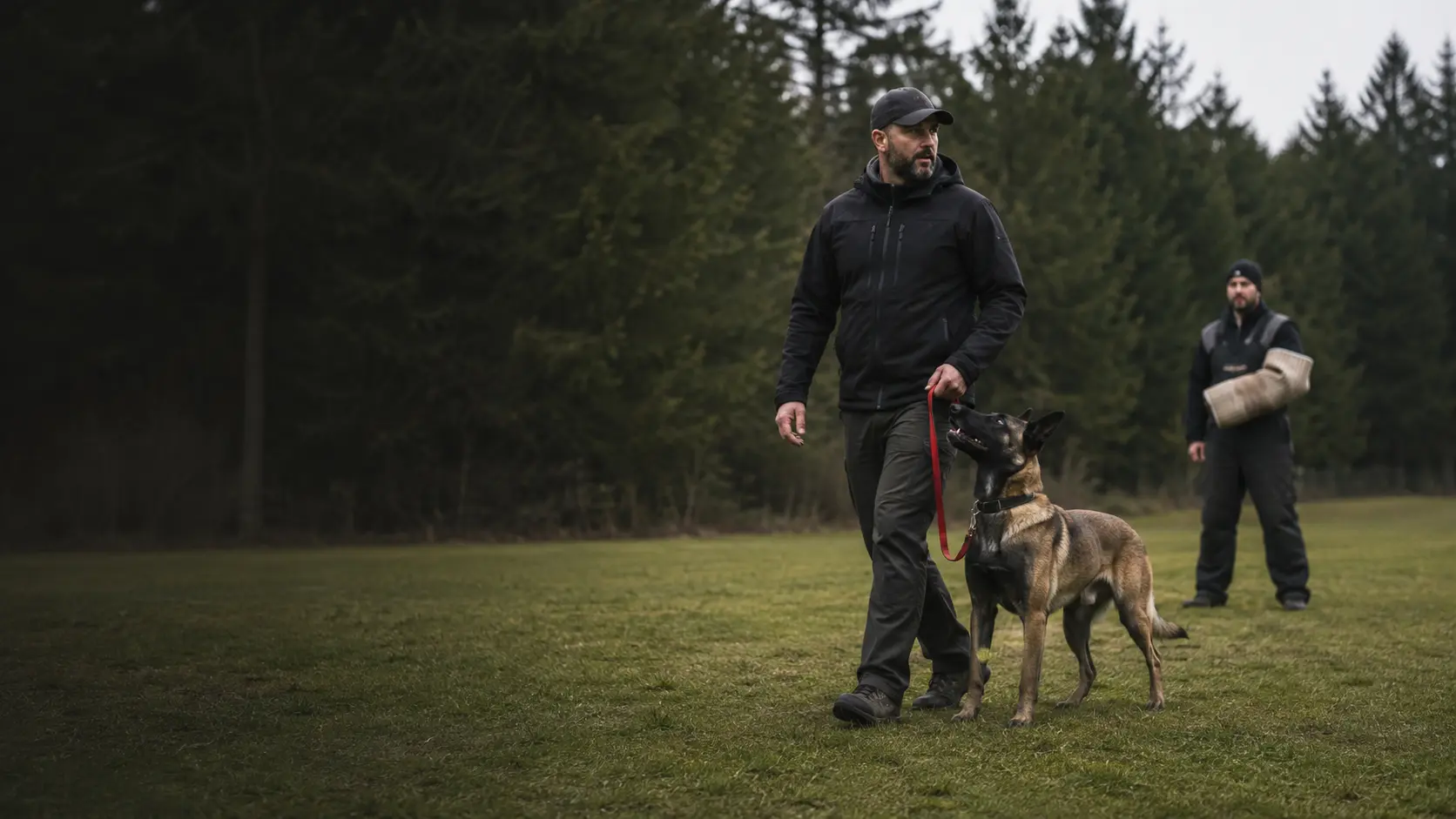
Stability is the foundation
Protection training should create clarity—not indiscriminate aggression
Responsible protection work develops controlled responses within a carefully managed training context. The dog should remain neutral when no work is requested, respond to the handler under arousal, disengage reliably, and recover after activity.
This is different from trying to make a fearful, reactive, or aggressive dog more confrontational. Dogs with behavior concerns need an appropriate behavior-support plan; protection training is not a shortcut or treatment for those issues.
THE STANDARD
Control, judgment, and recovery matter more than spectacle
Drive alone does not make a safe protection dog. Temperament, environmental stability, physical health, obedience, recovery, handler skill, and ongoing management all affect suitability.
Not every dog will qualify, and no responsible program can guarantee a particular outcome before hearing from the family and reviewing program fit.
Training matched to the team
Who protection dog training may be appropriate for
Breed alone does not determine suitability. Insight K9 considers the individual dog, handler, intended goal, training history, home environment, and ability to maintain the work responsibly.
Environmentally Stable Dogs
Dogs that recover well, remain clearheaded around ordinary people and places, and can work without rehearsing indiscriminate suspicion or fear.
Obedience-Ready Teams
Dogs and handlers prepared to strengthen recalls, positions, duration, impulse control, and responses around increasing arousal and distraction.
Suitable Working Dogs
Dogs with appropriate confidence, drive, physical ability, and recovery that may support a structured protection foundation after discussing goals and program fit.
Committed Handlers
People willing to practice consistently, follow safety guidance, maintain equipment, manage access, and keep control standards current over time.
Sport or Working Teams
Experienced teams seeking structured protection foundations or refinement within the trainer’s available disciplines, equipment, and facilities.
Clearly Defined Objectives
Handlers who can explain the practical goal and accept a recommendation for obedience, behavior work, sport, or another path when protection is not the right fit.
Build the complete response
What private protection dog training may include
The exact plan depends on the program-fit review, trainer availability, location, equipment, and the team’s progress. Advanced work is introduced only when the required foundations are present.
Obedience Under Arousal
Strengthen heel, place, recalls, positions, duration, and response to cues while distractions and working energy are increased thoughtfully.
Neutrality & Confidence
Develop clear behavior in ordinary environments so the dog can distinguish training from daily life and recover after challenging activity.
Drive Development
Build engagement with appropriate equipment and reinforcement while preserving clarity, responsiveness, and the dog’s ability to settle.
Controlled Decoy Work
When appropriate, introduce professionally managed equipment work with criteria chosen for the dog’s experience, confidence, and control.
Outs, Recalls & Recovery
Teach the dog to disengage, return to the handler, transition to obedience, and recover rather than remaining locked in uncontrolled arousal.
Handler Mechanics & Safety
Practice leash handling, positioning, timing, equipment use, observation, management, and decisions that keep training clear and controlled.
A responsible progression
How private protection dog training works
Start by telling us about your dog, your goals, and your experience. We’ll explain the program-fit process and a responsible next step. The welcome call and program-fit review determine whether protection work—and which starting point—makes sense.
Define the goal
Share the dog’s age, breed, health, training history, behavior concerns, household, current control, prior equipment work, and intended objective.
Review the team
Your trainer observes temperament, environmental confidence, recovery, drive, physical readiness, obedience, handler mechanics, and management.
Build control first
Establish or strengthen communication, neutrality, recalls, positions, impulse control, and recovery before adding advanced challenge.
Progress by readiness
Add drive work, equipment, environmental difficulty, and controlled scenarios only when the dog and handler demonstrate the needed foundation.
Progress you can track
What a stronger protection dog-and-handler team can look like
Progress is individual. The aim is not constant suspicion or uncontrolled intensity—it is clear communication, stable behavior outside the work, and responsible handling when arousal increases.
Dependable Control
The dog responds more consistently to obedience, disengagement, and recall cues while the handler maintains safer mechanics and clearer criteria.
Clearer Neutrality
Work and daily life remain distinct, with less unnecessary scanning, conflict, or rehearsal of confrontational behavior in ordinary settings.
Responsible Teamwork
The handler better reads arousal and recovery, makes appropriate decisions, manages the environment, and maintains the dog’s training over time.
Real clients. Practical coaching.
What owners say about training with Insight K9
“Tyler in Tacoma was incredibly professional and effective. He gave us the tools and confidence to train our German Shepherd properly.”Matt D. — Lakewood, WA
“We worked with Payton in Maple Valley for our five-month-old Lab. I was amazed how quickly she learned commands and improved her impulse control.”Karen S. — Ravensdale, WA
Protection training FAQs
Common questions before you begin
Can any dog do protection training?
No. Breed, size, or enthusiasm alone does not establish suitability. Temperament, confidence, recovery, health, obedience, drive, environmental stability, handler ability, and the intended goal all matter. An evaluation may result in a recommendation for foundation training or a different service.
Will protection training make my dog aggressive?
Responsible training should not aim to create indiscriminate aggression. It should preserve ordinary neutrality while building clearly cued, controlled work and reliable disengagement. Genetics, past learning, health, household management, training quality, and handler decisions still affect behavior, which is why evaluation and ongoing control are essential.
Can protection training fix fear, reactivity, or aggression?
No. Protection work is not behavior therapy and should not be used to make a fearful, reactive, or aggressive dog more confrontational. If those concerns are present, tell us before scheduling so we can identify an appropriate behavior evaluation and safer next step.
What happens during the protection program-fit review?
The trainer reviews goals, history, health, household management, obedience, environmental behavior, confidence, recovery, motivation, and the handler’s mechanics. Equipment or drive work is introduced only when appropriate. The purpose is to make a responsible recommendation, not to force every team into a protection program.
How much obedience does my dog need first?
The starting requirement depends on the dog and goal, but protection work requires usable control. Recalls, positions, leash handling, impulse control, neutrality, and recovery may need to be established or strengthened before advanced equipment work begins.
What equipment should I buy?
Do not buy bite equipment or a large gear package before the evaluation. The wrong equipment, fit, timing, or unsupervised use can create confusion and safety problems. Your trainer will explain which leash, collar, harness, reward, protective equipment, and practice setup are appropriate.
How long does protection training take, and is an outcome guaranteed?
There is no universal timeline or guaranteed outcome. Progress depends on suitability, starting control, physical and emotional readiness, practice, trainer access, equipment, location, and the final goal. Some dogs will not be appropriate for advanced work even after foundation training.
Private lessons across Washington
Find the right training path near you
Insight K9 serves multiple Washington communities. Protection-training availability can vary by trainer, location, equipment, facility access, and the program-fit review, so contact us to confirm the appropriate next step.
Start with a responsible program-fit review
Tell us about your dog, training history, current behavior, household, control, and protection goal. We will help determine whether protection work or another training path is the safer fit.