
Private behavior training • Washington
Dog Behavior Modification Training
Practical, individualized help for reactivity, aggression, fear, guarding, anxiety, and other behaviors that make everyday life difficult.
Insight K9 works one-on-one with dog-and-handler teams. We begin with the behavior, its context, your dog’s history, and immediate safety needs—then build a plan around what will make daily life more manageable.
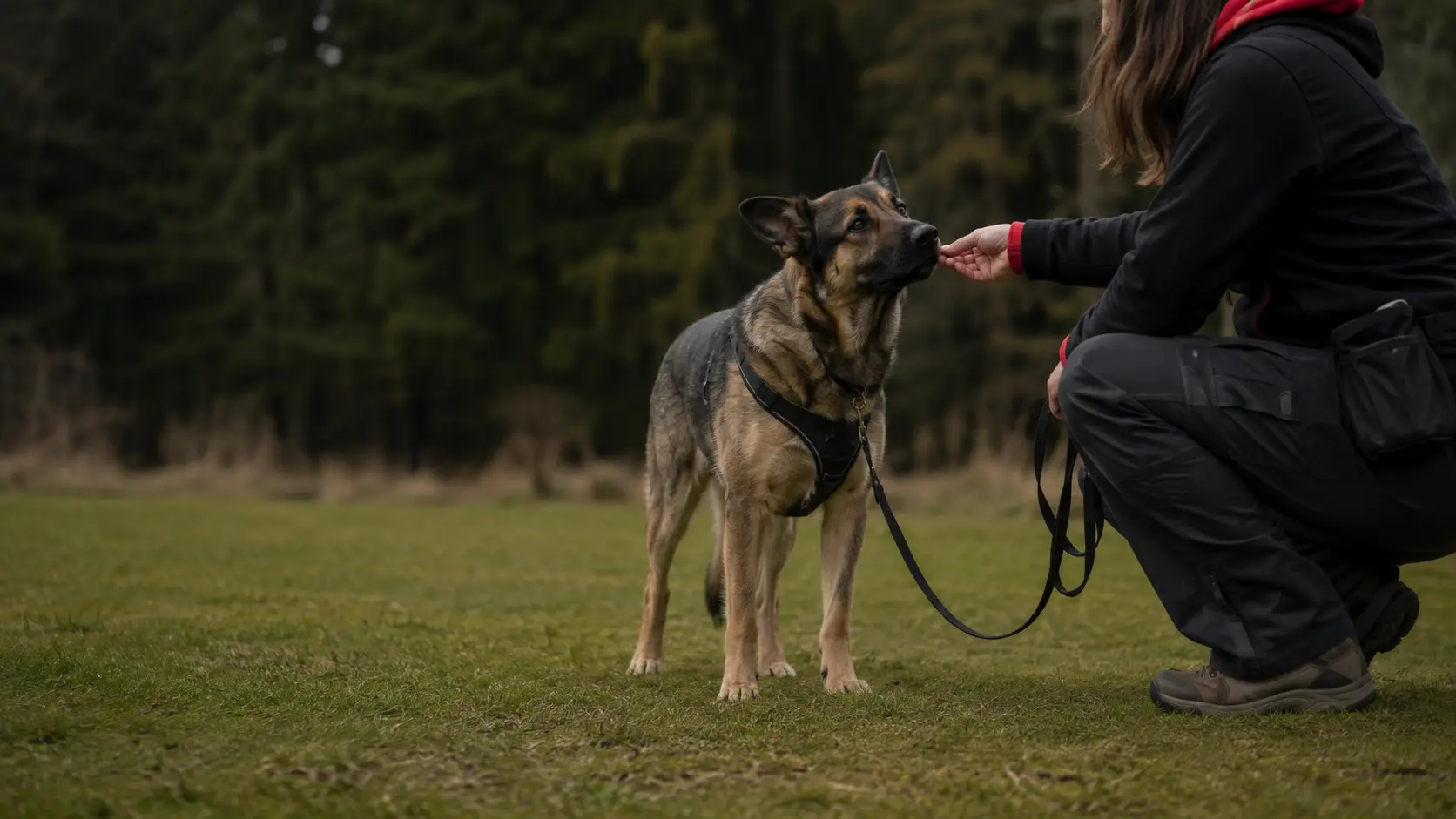
Change starts with context
When obedience alone is not enough
A dog may know sit, down, or heel and still bark, lunge, freeze, guard, panic, or struggle to recover around a trigger. Those behaviors require more than repeating commands.
Behavior modification looks at what happens before, during, and after the behavior. The goal is to improve communication, reduce unnecessary conflict, teach more useful responses, and help the handler make safer decisions in real situations.
THE PRACTICAL GOAL
Safer, more workable choices
Progress may mean your dog can disengage sooner, recover faster, follow a familiar routine, or remain at a safe distance without escalating.
Management is not failure. Gates, leashes, distance, household routines, and carefully planned exposure can protect progress while new skills develop.
Behavior concerns we can help with
Training for challenging behavior
The same outward behavior can have different causes. We begin by listening to what you are seeing, then choose the safest and most useful starting point for the dog in front of us.
Leash Reactivity
Barking, lunging, pulling, fixation, or difficulty recovering when dogs, people, vehicles, or movement appear on walks.
Dog-Directed Conflict
Tension, overarousal, fights, or unsafe interactions with unfamiliar dogs or dogs living in the same household.
Stranger & Visitor Concerns
Suspicion, territorial behavior, barking, avoidance, or aggressive responses around guests and unfamiliar people.
Fear & Avoidance
Freezing, fleeing, shutting down, noise sensitivity, environmental fear, or difficulty navigating unfamiliar situations.
Resource Guarding
Stiffening, hovering, growling, snapping, or biting around food, toys, resting spaces, objects, or valued people.
Separation-Related Distress
Vocalizing, destruction, escape attempts, pacing, or panic when left alone, with veterinary coordination when appropriate.
A plan you can use
What behavior modification may include
The exact plan depends on the behavior, its history, the environment, and the level of risk. These pieces often work together.
Management & Safety
Reduce preventable rehearsals, create safer routines, and establish clear handling procedures before adding difficulty.
Foundation Skills
Build engagement, leash communication, place work, recall foundations, settling, and other skills that support the larger plan.
Controlled Practice
Work at a distance and intensity where learning can occur, then progress thoughtfully instead of forcing a confrontation.
Trigger Awareness
Learn to recognize early body-language changes, patterns, thresholds, and recovery so you can act before the behavior peaks.
Handler Coaching
Practice timing, positioning, leash handling, reinforcement, exits, and daily routines with direct trainer feedback.
Real-Life Progressions
Gradually apply skills to the environments and situations that matter while preserving safety and successful repetitions.
A clear starting point
How private behavior training works
You do not need to diagnose the behavior or choose a preset package before contacting us.
Tell us what happens
Share the behavior, known triggers, bite or incident history, home environment, prior training, and your most important concerns.
Identify priorities
Your trainer listens to what you are experiencing, observes the dog and handler during training, identifies immediate safety needs, and chooses an appropriate starting point.
Build the plan
You receive practical management steps, skill work, and coached exercises matched to your dog and household.
Progress carefully
Difficulty increases as the dog and handler are ready, with the plan adjusted according to response and real-life results.
Meaningful progress, honestly framed
What improvement can look like
Behavior change is individual. The aim is measurable improvement in safety, recovery, communication, and quality of life—not a promise that every trigger or risk will disappear.
Better Disengagement
Your dog can shift attention away from a trigger and respond to a familiar handling plan more consistently.
Faster Recovery
Stress or arousal resolves more quickly, helping the dog return to useful behavior after a difficult moment.
More Predictable Routines
The household knows how to manage arrivals, walks, feeding, visitors, rest, and other common pressure points.
Real clients. Practical progress.
What owners say about Insight K9
“We were struggling with leash reactivity and couldn’t even walk our dog without stress. After just a few sessions with Ryan in Olympia, everything changed.”Jessica P. — Lacey, WA
“Ryan and Payton helped our reactive shepherd settle down and learn how to respond to commands in real life. The transformation was unbelievable. Highly recommend!”Melissa D. — Olympia, WA
Behavior modification FAQs
Common questions before you begin
How is behavior modification different from obedience training?
Obedience training teaches useful skills such as recall, place, heel, and settling. Behavior modification addresses patterns such as reactivity, fear, guarding, or aggression by considering triggers, emotional state, reinforcement history, environment, and safety. Obedience skills may be part of the plan, but they are not the entire plan.
Can you help a dog that has bitten?
A bite history does not automatically rule out training, but it must be disclosed before the first appointment. The trainer needs accurate details about severity, frequency, triggers, targets, and management so the case can be assessed honestly. Some cases may also require veterinary or specialist involvement.
Will behavior training completely eliminate aggression or reactivity?
No responsible trainer can guarantee that risk will disappear in every environment. Training can improve communication, management, recovery, and more appropriate responses, but outcomes depend on the dog, history, environment, handler consistency, health, and severity of the behavior.
What happens during the first conversation?
We review your dog’s history, daily environment, triggers, previous incidents, prior training, and goals. The trainer observes the dog-and-handler team without intentionally provoking a dangerous reaction, then recommends immediate management and useful next steps.
How long does behavior modification take?
There is no universal timeline. A mild, recent behavior may change faster than a long-standing pattern involving repeated incidents or serious risk. Progress also depends on practice, management, health, environment, and the dog’s ability to recover around triggers.
What training equipment will we use?
Equipment is selected according to the dog, handler, environment, and safety plan. Your trainer will explain how each item should fit, what purpose it serves, and how to use it correctly. Equipment supports training and management; it does not replace skill development.
Should my dog see a veterinarian first?
Sudden behavior changes, pain, neurological signs, severe anxiety, sleep disruption, or unusual sensitivity should be discussed with a veterinarian. Medical conditions can affect behavior, and some dogs benefit from coordinated veterinary and training support.
Private lessons across Washington
Find behavior training near you
Insight K9 trainers serve multiple Washington communities. Choose your closest location or contact us if you are unsure which trainer is the right fit.
Tell us what is happening
We will help identify the appropriate trainer and next step—without asking you to diagnose the behavior or choose a preset package first.