
Private Board & Train • Washington
Board and Train Programs
Focused residential training for dogs approved for the program who benefit from a consistent daily routine, one-on-one skill building, and a structured return-home plan.
Program fit, stay length, trainer and location, goals, and availability are determined after a welcome call and program-fit review. Board & Train is not a substitute for owner participation or a guarantee of permanent behavior change.
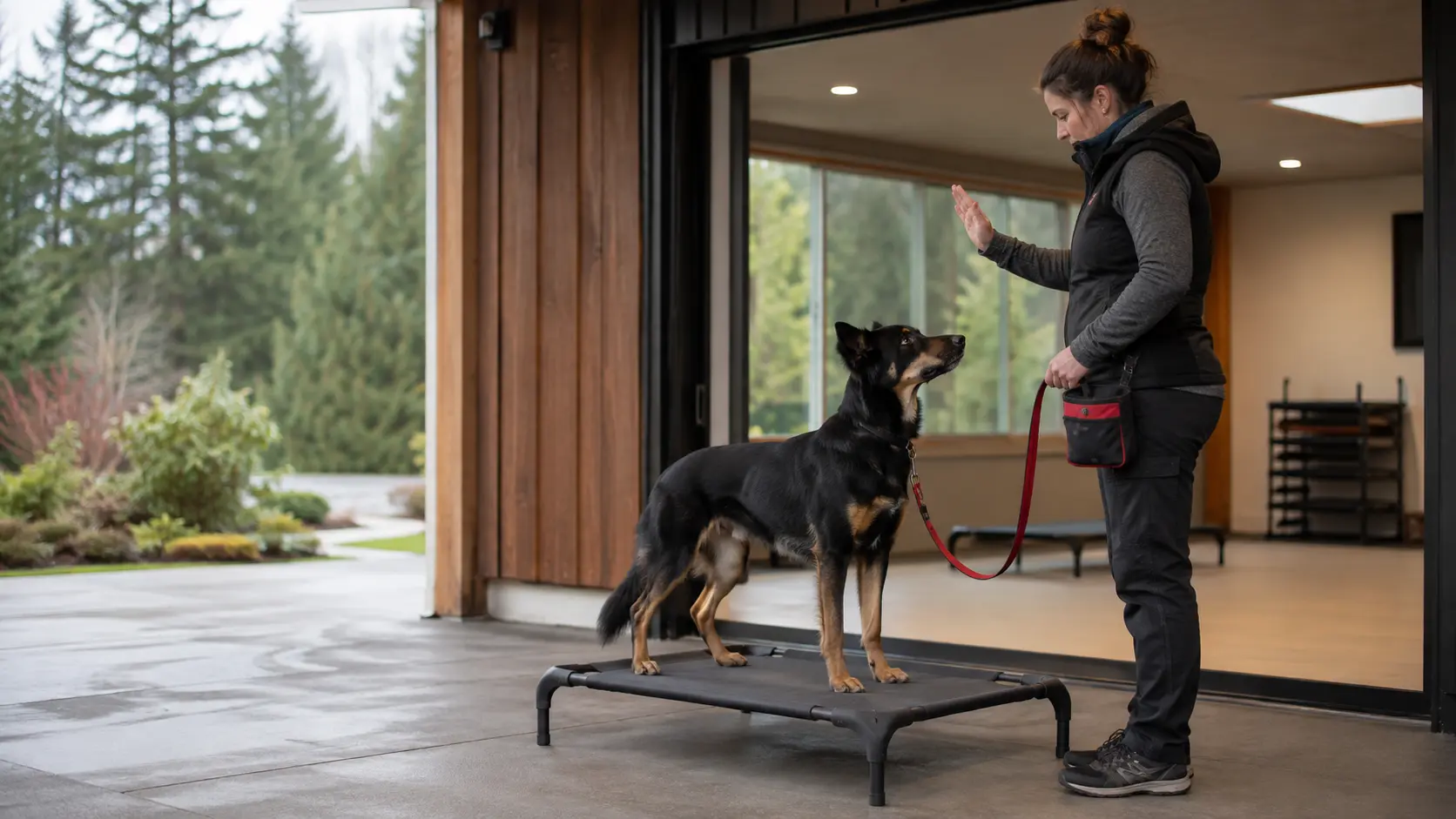
Residential training with a return-home plan
Training during the stay is only part of the program
A Board & Train program gives a trainer repeated opportunities to build skills inside a consistent daily routine. That focused practice can create clarity and momentum, but the dog must still learn to perform with the owner, in the home, and in the environments that matter after the stay.
Insight K9 treats owner education and transition planning as essential parts of the work. We set realistic goals, review progress honestly, and help owners understand how to cue, reinforce, maintain, and adapt the skills their dog has learned.
Ask about current availability and program fitTHE PRACTICAL STANDARD
Clear routines, usable skills, and a plan the household can maintain
A strong program is not measured only by what a dog can do for the trainer. The important test is whether the owner understands the system and can support the dog after returning home.
Progress varies by starting behavior, health, history, environment, goals, practice, and owner follow-through. Responsible training leaves room to adjust the plan when a dog needs a different pace or level of support.
Goals matched to the individual dog
What a Board and Train program may address
Actual goals are selected after reviewing the information you share and depend on the dog, requested outcome, trainer availability, environment, and what can be transferred responsibly back to the owner.
Everyday Manners
Build practical behaviors for doors, greetings, household routines, waiting, settling, handling, and moving calmly through daily life.
Leash Skills & Recall
Develop clearer leash communication, engagement, position changes, check-ins, recalls, and safer responses around ordinary distractions.
Puppy & Adolescent Foundations
Establish routines for crate comfort, house-training support, appropriate play, handling, confidence, impulse control, and early obedience.
Impulse Control & Settling
Practice place work, duration, calm transitions, waiting for access, disengagement, and recovery after manageable excitement.
Individual Behavior Support
For appropriate cases, create a structured plan for reactivity, fear, over-arousal, environmental difficulty, or other behavior concerns.
Advanced Foundations
Strengthen obedience, engagement, neutrality, drive control, or task foundations for dogs preparing for more specialized training.
Skills built inside a complete routine
What residential dog training may include
The exact curriculum is individualized. Training advances as the dog shows understanding, physical and emotional readiness, and the ability to recover from appropriate challenge.
Communication & Reinforcement
Establish clear markers, rewards, cues, boundaries, engagement, and a training language that can be taught to the owner.
Place, Crate & Settle Skills
Build comfort with rest, duration, transitions, stationing, and predictable routines without expecting constant activity.
Leash & Position Skills
Practice controlled movement, leash pressure and release, useful positions, turns, stops, and attention around distractions.
Recall & Engagement
Strengthen the value of returning, orienting to the handler, responding to cues, and choosing cooperation over competing distractions.
Neutrality & Recovery
Help the dog move through appropriate people, dogs, sounds, surfaces, locations, and activity while monitoring stress and recovery.
Generalization & Maintenance
Practice in suitable contexts, identify weak points, document progress, and create realistic steps for preserving skills at home.
A structured progression
How Board and Train works
You do not need to choose a preset stay before contacting us. The appropriate next step begins with your dog’s history, current behavior, goals, health considerations, and household needs.
Tell us about your dog
Share age, breed, health, training history, daily routine, behavior concerns, goals, household, and the environments involved.
Start with a welcome call
Your trainer reviews suitability, safety, starting skills, recovery, motivation, owner expectations, and which goals are realistic.
Train within daily routines
The dog practices selected skills through structured sessions, rest, handling, transitions, enrichment, and appropriate real-life contexts.
Transfer the work home
Owner instruction connects the trainer’s work to the household. Maintenance, troubleshooting, and follow-up needs are discussed clearly.
Progress you can continue
What a successful transition can look like
Results should be considered against the dog’s starting point and the owner’s ability to maintain the plan—not against a promise that a stay will permanently solve every challenge.
More Predictable Routines
The dog better understands how to move through rest, activity, handling, transitions, and everyday expectations.
More Usable Skills
Selected behaviors are practiced with greater clarity and reliability in the situations relevant to the program goals.
A Better-Informed Owner
The owner understands cues, reinforcement, equipment, routines, stress signals, maintenance, and what to do when progress changes.
Real clients. Practical coaching.
What owners say about training with Insight K9
“Tyler in Tacoma was incredibly professional and effective. He gave us the tools and confidence to train our German Shepherd properly.”Matt D. — Lakewood, WA
“We worked with Payton in Maple Valley for our five-month-old Lab. I was amazed how quickly she learned commands and improved her impulse control.”Karen S. — Ravensdale, WA
Board and Train FAQs
Questions to ask before your dog stays
What is a Board and Train program?
Board & Train is a residential training format in which an evaluated dog stays with an approved trainer or program location for focused work within a structured daily routine. The curriculum and length are individualized, and owner instruction is needed to transfer the skills home.
How long does Board and Train take?
There is no responsible universal timeline. Length depends on starting behavior, health, goals, learning history, program availability, safety, and the amount of owner transfer required. Your trainer will recommend an appropriate plan after discussing goals and program fit.
Is Board and Train appropriate for every dog?
No. Medical needs, severe separation distress, unsafe behavior, environmental sensitivity, age, recovery, boarding tolerance, or a mismatch between goals and available support may make another training format more appropriate. An evaluation protects the dog, trainer, owner, and household.
Can Board and Train address aggression or reactivity?
Some evaluated behavior cases may benefit from residential structure, but no format guarantees that aggression, fear, or reactivity will disappear. Safety management, owner education, appropriate environments, veterinary input when needed, and continued practice may all be part of the plan.
Will I still need to train my dog afterward?
Yes. Dogs do not automatically transfer every behavior from a trainer to an owner, home, or new environment. Handoff instruction and continued practice are essential for maintaining clarity, rebuilding fluency where needed, and preventing avoidable regression.
How will housing, care, feeding, and medications be handled?
Program-specific arrangements are reviewed before enrollment. Ask about housing, supervision, exercise, rest, feeding, medication procedures, emergency contacts, required health records, equipment, communication, and what you should bring. Board & Train is not a substitute for veterinary care.
Are results guaranteed?
No ethical dog-training program can guarantee a permanent outcome. Progress depends on the dog, goal, environment, health, practice, handling, owner follow-through, and changes over time. Insight K9 provides professional training and an individualized plan, while setting honest expectations about maintenance and limitations.
Availability varies by program and location
Find the right training format for your dog
Insight K9 serves multiple Washington communities. Board & Train availability, trainer assignment, housing, intake requirements, and supported goals can vary, so contact us to confirm the appropriate next step.
Begin with a welcome call—not a preset stay
Tell us about your dog, current routine, training history, behavior concerns, goals, health considerations, and household. We will help determine whether Board & Train or another private format is the responsible fit.