
Private Puppy Training • Washington
Private Puppy Training
Individual coaching for puppies and their people—building calm routines, clear communication, confidence, and practical skills from the beginning.
Training is paced for the puppy, household, health guidance, and real-life goals. Safe socialization means thoughtful exposure and recovery—not forced greetings or a promise that every challenge will disappear quickly.
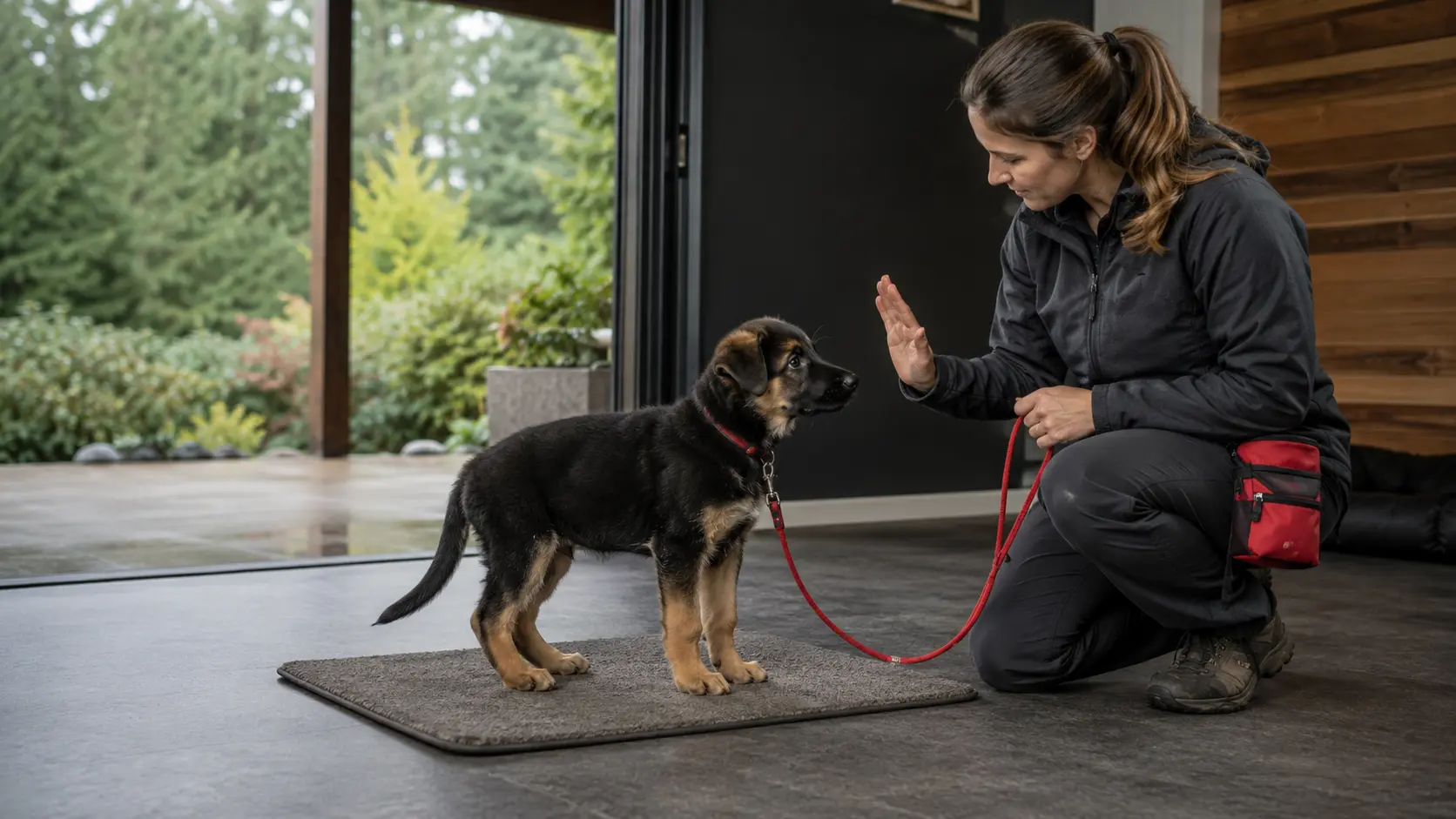
Start with the life you want to share
Build useful household habits before confusion becomes routine
Puppies are learning all day—even when a formal lesson is not happening. Private training helps owners organize feeding, rest, play, freedom, handling, reinforcement, and boundaries so the puppy receives consistent information.
The goal is not a tiny adult dog or a perfectly controlled puppy. It is an age-appropriate foundation: engagement, recovery, confidence, communication, and routines that can mature as the puppy grows.
Tell us about your puppy and householdTHE PRACTICAL STANDARD
Socialization is thoughtful exposure—not meeting everyone
Useful socialization helps a puppy notice people, dogs, sounds, surfaces, handling, movement, and new places while staying able to eat, think, recover, and reconnect with the owner.
Exposure is selected and paced for the individual puppy. Follow your veterinarian’s guidance about health, vaccination, and appropriate public environments.
Support for everyday puppy challenges
What private puppy training can address
Your trainer prioritizes the skills that matter in your household instead of forcing every puppy into the same preset sequence.
House-Training & Schedules
Organize supervision, outdoor trips, feeding, play, naps, freedom, and reinforcement so success is easier to repeat.
Crate & Settle Skills
Build calm associations with the crate, pen, mat, or resting area while supporting appropriate sleep and independence.
Biting, Chewing & Handling
Redirect puppy biting, protect appropriate outlets, and develop cooperative handling for grooming, care, and daily life.
Leash Foundations & Recall
Make following, checking in, returning, and moving with the owner rewarding before distractions become more difficult.
Manners & Impulse Control
Practice waiting, trading, settling, door routines, greetings, and access to resources without expecting adult-level duration.
Confidence & Safe Socialization
Create manageable experiences with novelty while protecting choice, recovery, and the puppy’s ability to stay connected.
A foundation that grows with the dog
Skills we can build together
The exact curriculum changes with age, development, health, temperament, environment, previous experience, and the owner’s priorities.
Communication & Reinforcement
Use clear markers, rewards, cues, boundaries, and timing so the puppy can understand which choices work.
Name Response & Engagement
Strengthen orientation to the owner, check-ins, play, food motivation, and the ability to reconnect after distraction.
Crate, Place & Rest
Develop predictable transitions between activity and rest while reducing unnecessary conflict around confinement.
Handling, Grooming & Vet Prep
Pair touch, restraint, equipment, body checks, grooming tools, and care routines with cooperative practice.
Leash Skills & Recall
Build value for moving with the handler, yielding to light leash guidance, returning, and staying engaged.
Exposure, Recovery & Confidence
Help the puppy process suitable sights, sounds, surfaces, people, dogs, movement, and environments without flooding.
Private coaching built around your puppy
How puppy training works
Start by telling us what you’re seeing and what you’d like daily life with your dog to look like. We begin with the puppy, the household, and the routines that need support.
Tell us about your puppy
Share age, breed, health guidance, home setup, daily schedule, previous experiences, current challenges, and goals.
Start with a first lesson
Your trainer observes the puppy and owner, identifies priorities, and explains a practical starting plan.
Build repeatable routines
Practice the selected skills and organize management, reinforcement, rest, freedom, and exposure around daily life.
Generalize and adjust
Increase appropriate difficulty, revisit weak points, and adapt the plan as the puppy develops and the environment changes.
Progress you can continue
What a useful puppy foundation can look like
Progress is measured against the puppy’s starting point and daily life—not against a claim that normal development can be rushed.
More Predictable Routines
The household has a clearer plan for rest, activity, supervision, training, freedom, and age-appropriate expectations.
Clearer Communication
The puppy and owner have a shared system for cues, reinforcement, redirection, engagement, and everyday boundaries.
Adaptable Confidence
The puppy has practice noticing change, seeking guidance, recovering from manageable stress, and learning in new contexts.
What matters between lessons
Small repetitions inside normal life create the foundation
Owners do not need to run long drills all day. Short, well-timed repetitions during meals, doorways, leash walks, play, handling, rest, and new experiences make training easier to understand and maintain.
Your trainer helps you decide what to practice, what to manage, when to make the task easier, and how to recognize when the puppy needs rest or a different plan.
OWNER COACHING
A plan should work when the trainer is not there
Private lessons give owners direct practice with timing, reinforcement, leash handling, setup, troubleshooting, and reading the puppy’s response.
Consistency matters, but consistency does not mean rigidity. The plan should change as the puppy’s skills, confidence, body, environment, and developmental stage change.
Puppy training FAQs
Questions about starting well
When should puppy training begin?
Learning begins as soon as the puppy arrives home. Age-appropriate private coaching can start with household routines, engagement, crate comfort, handling, reinforcement, and safe exposure. The exact plan should account for the puppy’s health, development, and your veterinarian’s guidance.
Does my puppy need every vaccination before training?
Ask your veterinarian for health and vaccination guidance specific to your puppy and local risk. Training can include low-risk work at home and carefully selected environments, but public exposure should be chosen responsibly rather than treated as all-or-nothing.
Do you offer puppy group classes?
Insight K9 focuses on private training. One-on-one coaching allows the lesson, environment, pace, and owner practice to be shaped around the individual puppy and household.
Can you help with house-training, biting, or crate problems?
Yes, these are common puppy-training priorities. Your trainer reviews supervision, schedule, environment, reinforcement, rest, appropriate outlets, confinement setup, and patterns that may be contributing to the problem. Medical concerns should be discussed with a veterinarian.
What does safe puppy socialization mean?
Socialization is the process of learning about the world, not a requirement to greet every person or dog. Useful exposure is controlled, positive or neutral, appropriate for the puppy’s health and development, and paced so the puppy can recover and reconnect.
How is puppy training different from general obedience?
Puppy training includes early development, household setup, sleep, confinement, biting, handling, play, safe exposure, and owner routines in addition to beginning cues and manners. As the dog matures, the plan can transition into more advanced obedience or specialized goals.
How long will puppy training take?
There is no responsible universal timeline. Progress depends on age, development, temperament, health, environment, starting behavior, goals, practice, and consistency across the household. Your trainer can recommend the next useful step after meeting you and your puppy.
Private puppy training across our service areas
Find the right trainer and next step
Insight K9 serves multiple Washington communities. Trainer assignment, travel, availability, and supported goals can vary, so contact us with your location and the help your puppy needs.
Give your puppy a clearer start
Tell us about your puppy, household, schedule, location, current challenges, and goals. We will help connect you with the appropriate trainer and next step.