Private, one-on-one coaching
Private Dog Training
One-on-one coaching for everyday manners, clearer communication, and the situations that matter most with your dog.
Start with a welcome call. We’ll help you choose the right next step.
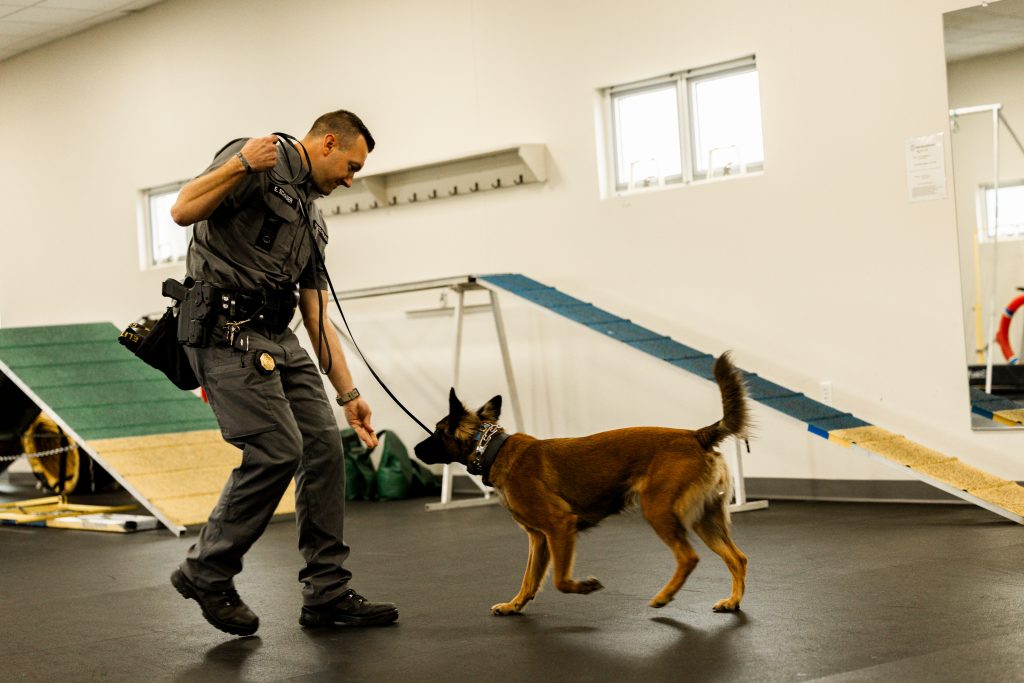
Focused support for real-life goals
What can we work on?
Your trainer prioritizes the skills and situations that matter to your household instead of forcing every dog into the same sequence.
01 / MANNERSEveryday Manners
Build clearer routines for greetings, doors, meals, visitors, household boundaries, settling, and polite access to resources.
02 / MOVEMENTLeash Skills & Recall
Strengthen check-ins, loose-leash movement, position changes, returning when called, and engagement around distractions.
03 / FOUNDATIONSPuppy & Adolescent Skills
Support age-appropriate routines, communication, confidence, handling, impulse control, and changing developmental needs.
04 / CALMImpulse Control & Settling
Teach practical transitions between activity and rest while organizing the environment so calmer choices are easier to repeat.
05 / SUPPORTBehavior Support
Discuss barking, lunging, fear, guarding, conflict, or other concerning patterns and identify an appropriate, safety-aware next step.
06 / ADVANCEDAdvanced & Specialized Foundations
Develop reliable communication, engagement, positions, control around distraction, and prerequisite skills for more specialized goals.
A clear path into private coaching
How training starts
Start with a conversation about your dog and goals.
Tell us about your dog
Share your goals, location, and what you’re seeing.
Talk with a trainer
Discuss your needs and agree on a practical starting point.
Train one-on-one
Your trainer coaches you and your dog through the skills that matter.
Practice and adjust
Use your homework between lessons and build on your progress.
Our training approach
Behavior is affected by the environment, learning history, motivation, household routines, physical comfort, and the owner’s handling. Private coaching gives your trainer room to observe those details and choose a useful starting point.
The lesson can move at your dog’s pace, focus on the situations that matter at home, and give you direct practice with timing, reinforcement, leash handling, setup, and troubleshooting.
Talk with our team — An administrator connects your family with the trainer best suited to help and arranges an informal welcome call. The appropriate private booking link is sent afterward.THE PRACTICAL STANDARD
A plan should solve the right problem—not just rehearse a cue
A skill gap, a management problem, fear, over-arousal, pain, and unclear communication can look similar from the outside. The first useful step is understanding what is maintaining the behavior.
Training plans may combine teaching, management, environmental changes, owner practice, and veterinary input when health or physical comfort could be involved.
Skills and training details
The exact curriculum changes with health, temperament, environment, previous learning, owner needs, and the situations where the skill must work.
Communication & Reinforcement
Use clear markers, rewards, cues, boundaries, and timing so the dog can understand which choices work.
Engagement & Motivation
Strengthen check-ins, play, food motivation, responsiveness, and the ability to reconnect after distraction.
Leash & Position Skills
Build comfortable leash handling, yielding, heel or walking positions, stays, and useful transitions.
Recall & Distance
Develop value for returning, responding away from the handler, and staying connected as distance and distraction change.
Place, Settle & Transitions
Practice moving between activity, waiting, rest, release, and everyday routines with clearer expectations.
Generalization & Maintenance
Help skills transfer to new rooms, people, locations, surfaces, distances, and distraction levels without rushing difficulty.
What progress can look like
Progress is measured against the dog’s starting point and your real life—not against a promise that every dog will reach the same outcome on the same schedule.
Clearer Household Routines
The household has a more consistent plan for setup, reinforcement, boundaries, freedom, rest, and practice.
More Usable Skills
The dog practices selected behaviors in the contexts where the owner actually needs them to work.
A Better-Informed Owner
The owner can recognize patterns, adjust difficulty, reinforce effectively, and make clearer decisions between lessons.
Practice between lessons
Private training is not only something a trainer does to the dog. Owners learn how setup, timing, reinforcement, leash handling, expectations, and consistency affect the choices the dog makes.
Short repetitions inside walks, meals, doorways, play, rest, visitors, and other normal routines are often easier to maintain than long drills disconnected from daily life.
OWNER COACHING
A plan should still make sense when the trainer leaves
Your trainer gives you direct practice, explains what to notice, and helps you decide when to reward, redirect, manage, make the task easier, or pause.
Consistency matters, but consistency does not mean rigidity. A useful plan changes as the dog’s skills, comfort, environment, and goals change.
Private dog training FAQs
Common questions
What happens in a private lesson?
Your trainer reviews the dog’s history and goals, observes the dog and owner, identifies useful priorities, demonstrates the selected skills, and gives the owner coached practice. The exact structure depends on the dog and the reason for the appointment.
Is private training appropriate for puppies and adult dogs?
Yes. Private coaching can be adapted for puppies, adolescents, adult dogs, and older dogs. The plan should account for development, health, physical comfort, temperament, previous learning, and realistic household needs.
Can private lessons help with reactivity or aggression?
Private evaluation may be an appropriate starting point for barking, lunging, guarding, fear, conflict, or aggressive behavior. Safety, environment, bite history, health, and severity matter, so the trainer may recommend management, veterinary input, a specialized behavior plan, or another service. No outcome can be guaranteed.
Do you offer group classes?
Insight K9 focuses on private dog training rather than group classes. One-on-one coaching allows the pace, environment, skill selection, and owner practice to be shaped around the individual dog.
How do I get started?
Start by telling us about your dog, location, current concerns, and goals. We arrange a welcome call, recommend the right next step, and send your private booking link afterward.
Where are private lessons offered?
Insight K9 offers private lessons in Olympia, Spanaway, Maple Valley and Ravensdale in Washington, and Hermiston, Oregon. We have no Tri-Cities location and do not offer lessons in the Tri-Cities. Trainer assignment, supported goals, travel, and appointment availability vary by area; our team will confirm the right options during your welcome call.
How many lessons will my dog need?
There is no responsible universal timeline. Progress depends on health, temperament, learning history, environment, starting behavior, goals, owner practice, and consistency across the household. Your trainer can recommend the next useful step after working with you and your dog.
Locations & related training
Start with a private lesson, or explore the related service that best matches your dog’s age, needs, and training goals. Trainer assignment, availability, and supported goals can vary by location.
Ready to get started?
Tell us about your dog and goals. We’ll help you choose the right trainer and next step.